50 Street Market Line Icons: Your Design Toolkit for Vibrant Visuals
Every designer knows the feeling. You're building a brand for a local food festival, a neighborhood app, or a community blog, and you need visuals that feel authentic, not generic. You need icons that capture the bustling energy, the friendly sellers, and the unique character of a street market. This is precisely where a well-crafted set of 50 Street Market Line Icons moves from being a nice-to-have to an essential part of your design assets library. It’s not just about having pictures of a basket or a food truck; it’s about having a cohesive visual language ready to deploy.
A Practical Visual System, Not Just a Collection of Pictures
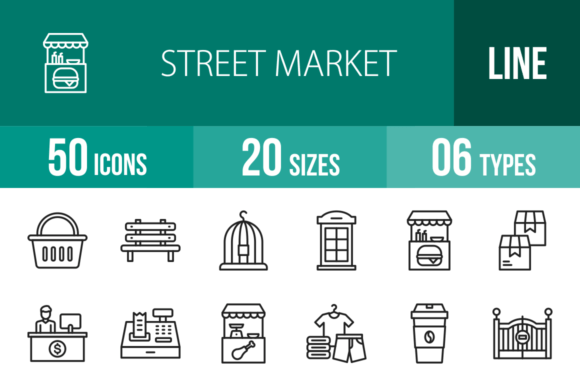
The true value of these icons lies in their systematic design. Created using a unigrid system, every element—from the entrance to the vending machine—shares a consistent stroke weight, optical size, and level of detail. This isn't an afterthought; it's the foundation of professional modern typography and iconography. When you use a location pin next to a stall icon, they feel like they belong together. This consistency is critical for building a strong brand identity, whether you're designing a logo for a new coffee cup shop or creating social media graphics for a weekend market.
Each icon is 100% vector, meaning you can scale a tiny QR code for a business card or a large sale banner without losing an ounce of clarity. The six different file formats—AI, CDR, EPS, JPG, PNG, SVG—ensure you're never stuck. Need a transparent PNG for a website header? It's there. Need an editable vector for a custom illustration? You're covered. The 20 different PNG sizes, ranging from 16x16 to larger dimensions, mean you have pixel-perfect assets for every context, from mobile app interfaces to high-resolution print presentations.
Where These Icons Truly Shine: Real-World Applications
Think beyond the obvious. Yes, these are perfect for designing the interface of a local market app or the signage for a grocery store. But their utility extends far wider. Consider a packaging design for artisanal spices—using the spices and weight scale icons can add a charming, authentic touch. A food blogger could use the food stall, burger stall, and halal food icons to create a visually engaging category system for their recipes.
For entrepreneurs and small business owners, these icons are a shortcut to professionalism. Instead of commissioning custom illustrations for your new chicken shop or fruit stand, you can use these polished line icons to create menus, flyers, and social posts that look thoughtfully designed. They work beautifully in editorial design too—a magazine feature on urban culture or community events can use icons like street lamp, bench, and umbrella to break up text and guide the reader's eye.
Integrating Icons into Your Design Workflow
Choosing the right icons is just the first step. The real magic happens in how you integrate them. Always start by considering the overall personality of your project. A playful children's fair might favor the rounded, friendly shapes of the ice cream stall and birdcage, while a sophisticated gourmet market might lean into the cleaner lines of the cash counter and rack. Test them alongside your chosen typefaces. Do they complement a sans serif font for a modern feel, or do they pair better with a handwritten font for a rustic vibe?
Pay close attention to visual hierarchy. Use a bolder, larger icon like food truck as a focal point, supported by smaller, more detailed icons like cashier machine or menu for secondary information. Remember, their strength is in their simplicity. Avoid cluttering a design with too many; instead, select a few that tell your specific story. The no littering and no plastic bags icons, for instance, are perfect for communicating sustainability values subtly and effectively.
Ultimately, this collection of 50 Street Market Line Icons is more than a set of premium font alternatives or generic clipart. It's a versatile toolkit for visual communication. It helps you build recognition, maintain consistency across platforms, and connect with an audience that values authenticity and community. By treating these icons as a fundamental part of your design system, you empower your projects with a personality that's both professional and deeply human.